
Loading…
Well testing
Planning a DST or surface test programme?
Tell us about your well objectives and we will propose a testing package that fits your schedule and budget.
Well testing
Tell us about your well objectives and we will propose a testing package that fits your schedule and budget.
Eastern Testing Services
Advanced Tubing Conveyed Perforating (TCP) solutions utilizing high-performance shaped charge technology to deliver clean perforation tunnels, enhanced reservoir connectivity, and optimized well productivity.
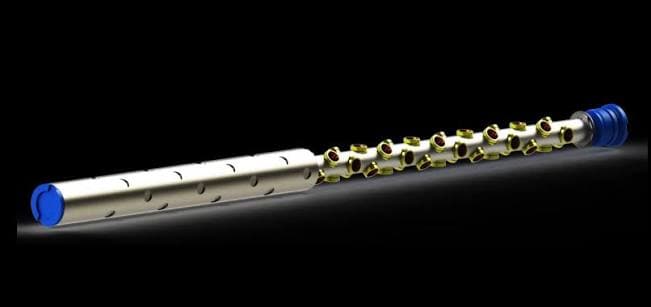
Tubing Conveyed Perforating (TCP) services are designed to deliver precise, reliable, and efficient perforation solutions for a wide range of well conditions. Utilizing advanced perforating systems and high-performance shaped charge technology, TCP operations establish effective communication between the reservoir and the wellbore, maximizing production potential while maintaining well integrity.
The CONNEX™ Reactive Perforating system represents a significant advancement in perforation technology through its proprietary liner metallurgy and innovative charge design. Unlike conventional shaped charges, CONNEX™ technology initiates a secondary reactive effect within the perforation tunnel, creating clean, debris-free tunnels with minimal formation damage and virtually eliminating the crushed zone that can restrict fluid flow.
The technology delivers penetration depth and casing entry performance comparable to conventional deep-penetrating charges while remaining fully compatible with existing TCP and wireline deployment systems. By enhancing near-wellbore connectivity and reducing formation damage, CONNEX™ perforating improves reservoir inflow and overall well productivity across a broad range of reservoir conditions.
Extensive laboratory and field validation has demonstrated the superior performance of CONNEX™ Reactive Perforating technology under representative reservoir stress and pressure conditions Comparative testing using natural rock targets has consistently shown cleaner perforation tunnels and significantly improved flow performance when compared with conventional shaped charges The secondary reactive effect removes crushed formation material and perforating debris throughout the entire tunnel length, resulting in improved reservoir connectivity and productivity